Judo vs. Karate for kids: Which is right for your child?
What’s the difference between Judo and Karate?
Judo and karate are both Japanese martial arts with strong traditions in character development, but they differ fundamentally in technique. Judo is a grappling art — practitioners use throws, trips, and groundwork (pins, holds) to control an opponent. Karate is a striking art — practitioners use punches, kicks, and blocks. Both are Olympic sports, both build discipline and confidence, and both are excellent activities for children.
The best choice depends on your child’s personality, interests, and what you’re hoping they’ll get out of the experience.
How the techniques differ
Judo: throwing and grappling
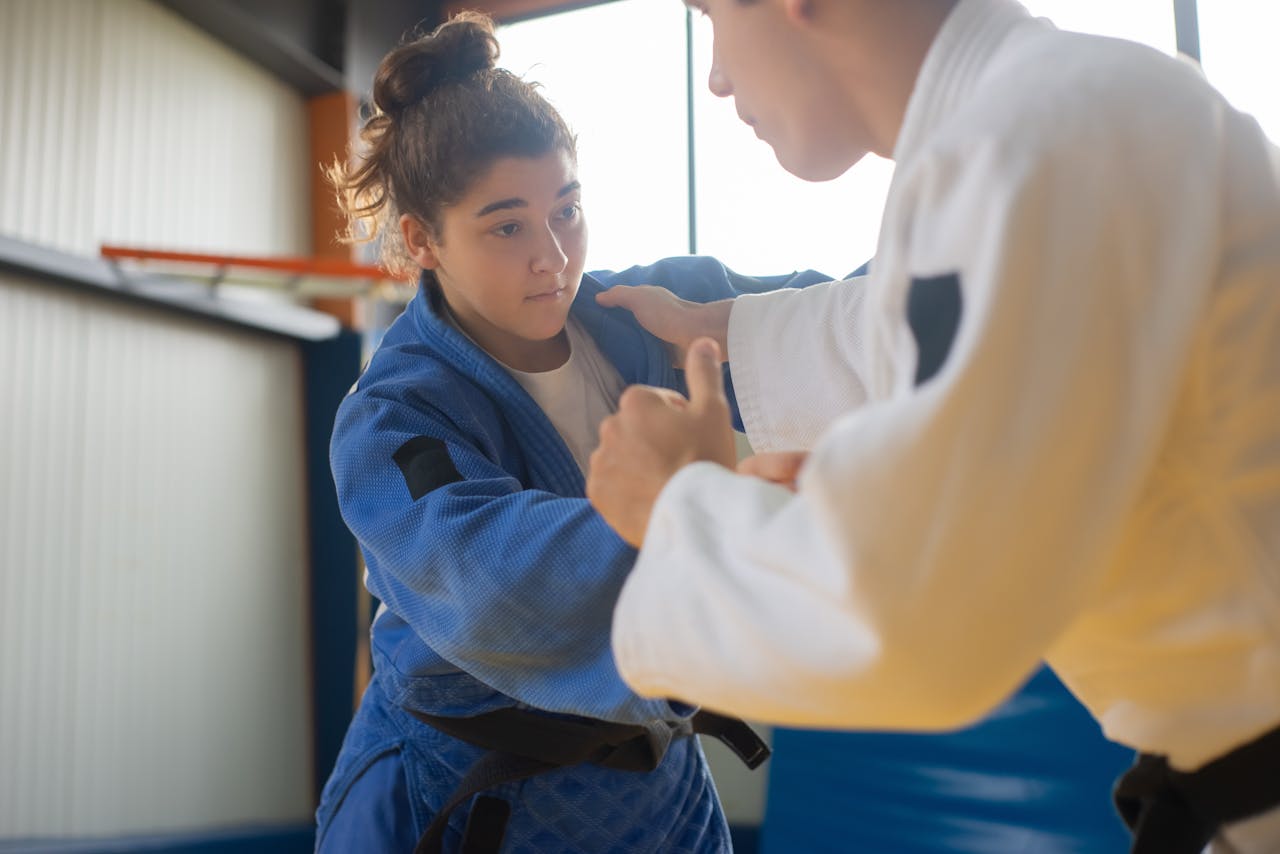
In judo, students learn to use balance and leverage to throw a partner to the ground, then control them with pins and holds. There is no punching or kicking. The very first skill taught is ukemi (breakfalls) — how to fall safely. Practice is always done with a partner on thick mats.
Judo’s techniques are highly physical and involve close contact. Children who enjoy wrestling, roughhousing, or physical play often take to judo naturally.
Karate: striking and forms
In karate, students learn punches, kicks, blocks, and formal movement patterns called kata. Training includes both solo practice (performing kata individually) and partner drills. Some karate styles include light contact sparring; others are non-contact.
Children who enjoy precise, individual practice and learning choreographed sequences often gravitate toward karate.
Physical development
Both martial arts develop coordination, balance, flexibility, and overall fitness, but they emphasize different physical skills:
| Judo | Karate | |
|---|---|---|
| Primary movement | Grappling, throwing, groundwork | Striking, blocking, forms |
| Strength focus | Full-body grip and core strength | Speed, explosive power |
| Flexibility | Needed for ground techniques and throws | Needed for high kicks and stances |
| Cardiovascular | High — randori (live practice) is intense | Moderate to high, depending on style |
| Balance | Central — throwing requires breaking and maintaining balance | Central — stances and kicks require stability |
Character and discipline
Both judo and karate have deep traditions of respect, discipline, and personal growth. The approach differs slightly:
Judo emphasizes jita kyoei (mutual welfare and benefit) and seiryoku zenyo (maximum efficiency with minimum effort). Because judo is entirely partner-based, children learn to take care of training partners, communicate, and develop empathy through physical practice. Every time a child practises a throw, someone is being thrown — building trust and responsibility.
Karate emphasizes self-improvement through individual effort, with kata practice encouraging focus, memorization, and self-discipline. The dojo kun (training principles) vary by style but commonly stress character, effort, etiquette, and self-control.
Safety comparison
Both arts are safe when taught by qualified instructors. The injury profiles differ because the techniques differ:
Judo’s main risks come from falls and throws — which is why breakfall training is the foundation of all judo instruction. Minor sprains and bruises from grappling are the most common issues.
Karate’s main risks come from sparring contact. Children’s programs widely use non-contact or light-contact rules and protective equipment, making children’s karate very safe in practice.
In both cases, the quality of instruction and supervision matters far more than the style itself. A well-run program with certified instructors will be safe regardless of whether it’s judo or karate.
Which child suits which art?
There’s no wrong choice — either art is a strong foundation. But some temperament signals can guide the decision:
Your child might prefer judo if they:
- Enjoy wrestling, roughhousing, or physical play
- Like working closely with a partner
- Thrive on variety and improvisation (judo’s randori is unpredictable)
- Are interested in an Olympic sport with a path to competition
Your child might prefer karate if they:
- Prefer individual practice and working at their own pace
- Enjoy learning and perfecting precise movements and sequences
- Are more comfortable with less physical contact
- Like the structure of progressive kata learning
Many children enjoy both. It’s not uncommon for kids to try one, then the other, and some train in both.
Both are available in Guelph
In Guelph, Ontario, both judo and karate are available — and they happen to share the same facilities:
Kohbukan Judo Club offers children’s judo (ages 6–14) on Monday and Wednesday evenings at 10 Speedvale Ave E. Founded in 1974, Kohbukan is Guelph’s only judo club, with NCCP-certified instructors and a free trial week for new students. Contact Kohbukan.
Sealy Karate Schools offers karate programs for kids and adults at the same location, founded in 1991 by Kyoshi Kevin Sealy (8th degree black belt in Shorinji-Ryu). Their training combines Shorinji-Ryu karate with boxing, jiu-jitsu, and aikido techniques. Contact Sealy Karate.
If you’re unsure which is the better fit, try both — the two clubs share the same facilities at 10 Speedvale Ave E in Guelph. Kohbukan offers a free trial week for judo, and you can contact Sealy Karate directly about trying a karate class.